Find the why behind the struggle
When a child struggles in school, the answer is rarely "try harder." Reading and learning difficulties are almost always a skills gap, not an effort gap. Before you can close the gap, you have to find what is actually causing it.
We help you uncover the underlying cause—then build the skills that close the gap and restore confidence. We screen. We do not diagnose or treat. Where something needs proper care, we say so plainly and point to where it is.
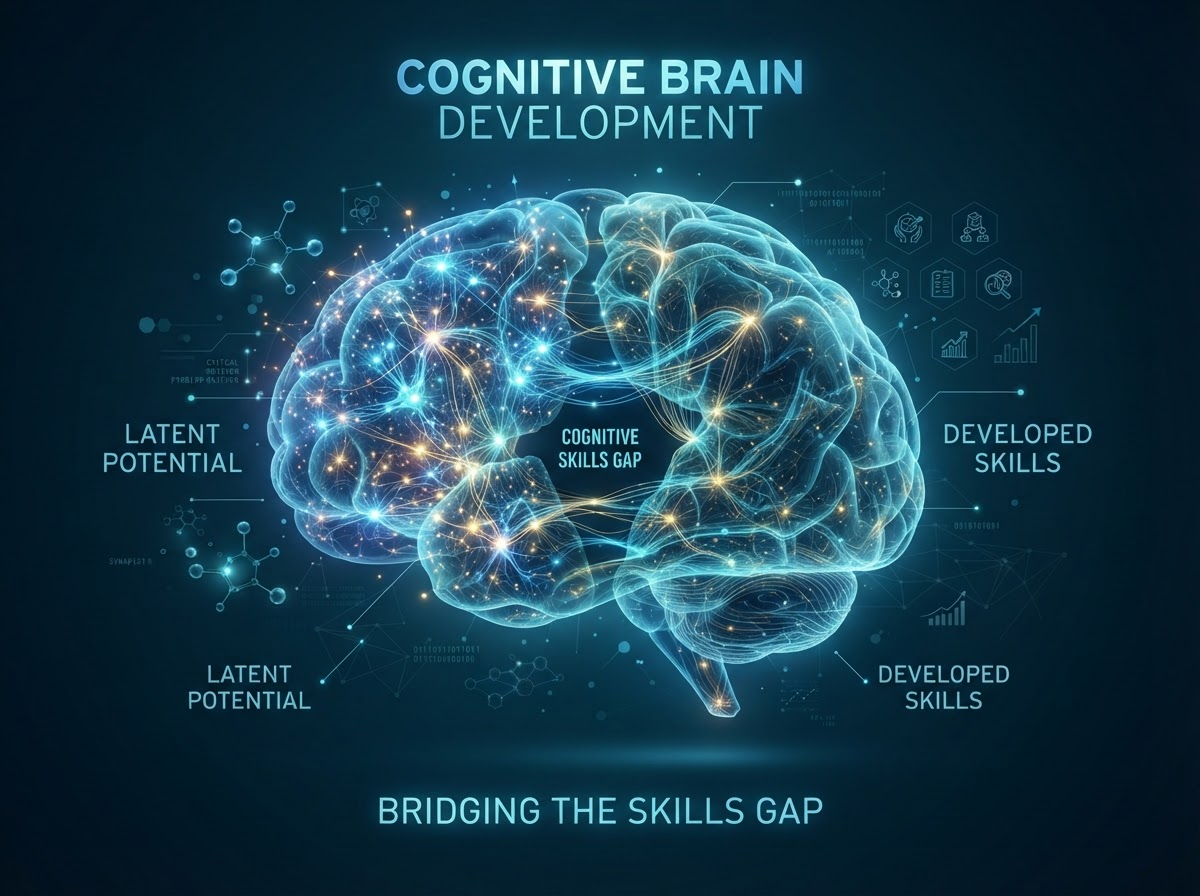
The struggle is real. The cause is findable.
Treating symptoms never closes the gap
Most interventions focus on the symptom—a child can't read—and respond with more reading practice. But if the underlying skill is weak, more practice just builds frustration. You have to find the why first.
- Avoids reading or melts down at homework time
- Guesses at words instead of sounding them out
- Loses place or skips lines while reading
- Reads slowly and tires quickly
- Understands when read to, but not when reading alone
- Says 'I'm stupid' or 'I can't do it'
- Visual processing gaps — letters blur, jump, or reverse
- Working memory overload — can't hold the whole sentence
- Slow processing speed — exhaustion and avoidance
- Auditory processing gaps — sounds blend together
- Weak logic & reasoning — can't connect meaning
- Low confidence and mindset — 'I just can't'
Three steps from struggle to skills
You don't need to become an expert. You need to stay interested—and we give you something to be interested in.
The six skills that make reading possible
Reading is not a natural instinct—it is a complex synthetic brain process. When a child struggles, the gap lies in one or more of these core cognitive processing skills.
The Gibson Test of Brain Skills
Used in over 150 centers globally, the Gibson Test evaluates cognitive strengths and weaknesses in under an hour. By pinpointing exact skill gaps, parents and educators avoid wasting time on ineffective tutoring.
Stop guessing. Start finding.
The interactive diagnostic walks you through the reading pipeline step by step—so you can see exactly where your child's gap is and what to do about it.